Our history | Nuestra historia
Shaping generations in Price Hill from Pre-K through 8th grade | formando generaciones en price hill desde pre-k hasta 8º grado.
Early 1884 – The Conestoga Wagon Commute
Education was prioritized from the absolute beginning of Holy Family's history. Months before the parish's physical classrooms were even completed, the first organized classes began.
The children temporarily traveled to the nearby Mt. St. Mary Seminary, where they were educated by the Sisters of Charity of Cincinnati. The pioneering teaching staff—Sister Delphina Hannon, Sister Rosette Higgins, and Sister Carlotta Freeman—faithfully commuted to the hill every morning from Cedar Grove (now Seton High School) in a horse-drawn Conestoga wagon.
1885 – Milestones
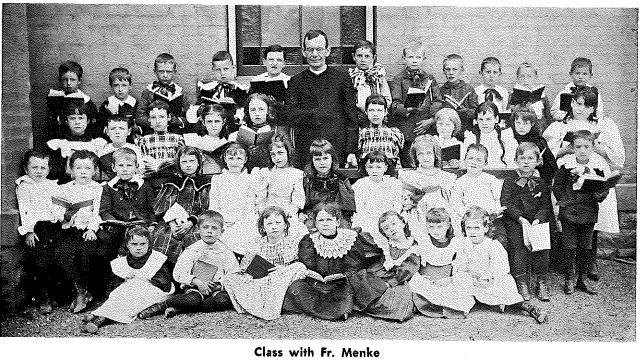
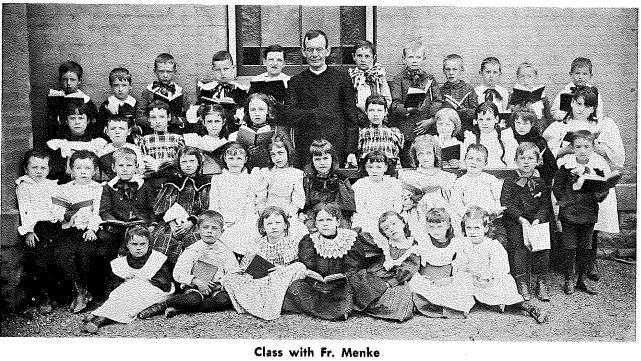
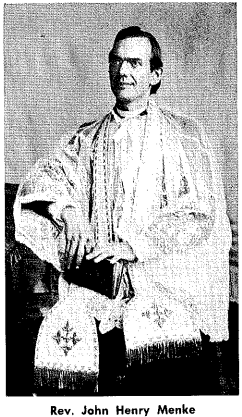
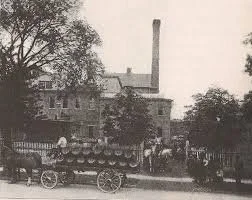
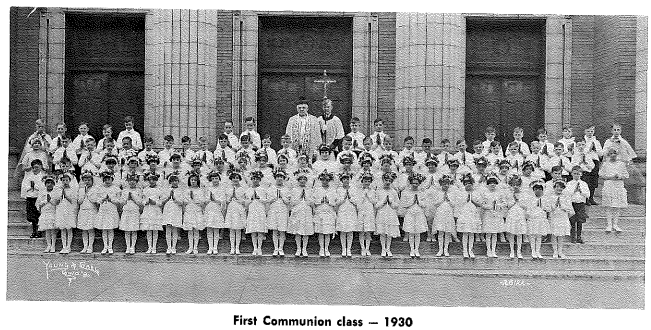
As the school successfully wrapped up its first academic year, it celebrated major spiritual milestones. On June 4, 1885, Holy Family School marked its very first Holy Communion class, consisting of four 12-year-old boys. Ten days later, Archbishop Elder confirmed the first parish confirmation class. Because the student body was so small during these early years, the children frequently got to go on school field trips to the local zoo—with Father Menke cleverly arranging an open brewery wagon to serve as their school bus!
Late 1884 – Classrooms in the Basement
When the original church building was completed on Price Avenue, the school finally moved into its first official home. Two dedicated classrooms were established directly underneath the main church hall.
The school officially opened its doors with a first-grade class of just eight children and a total starting enrollment of approximately 30 students.
1890s - era of expansion
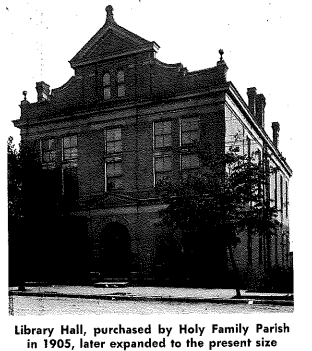
As Price Hill continued to grow, so did the enrollment at Holy Family School. By September 1890, the church and school spaces were already becoming tight, forcing the parish to expand the church gallery for extra seating. By July 1898, the Board officially declared that the school was entirely too crowded and began scouting new, larger plots of land. This rapid growth set off a decades-long legacy of expansion, leading to the construction of dedicated campus buildings to support the generations of students that followed.
1911 – Dedication of a New School Building
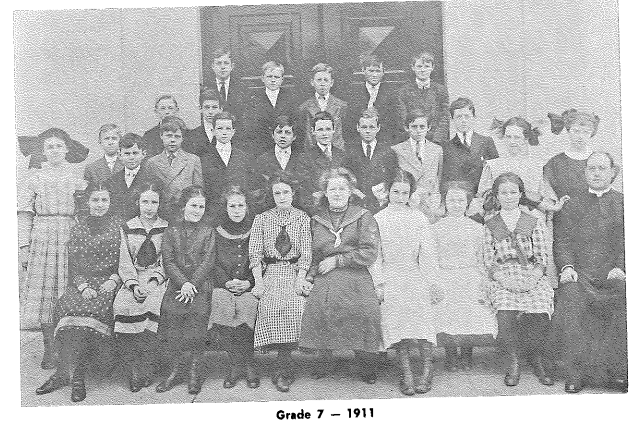
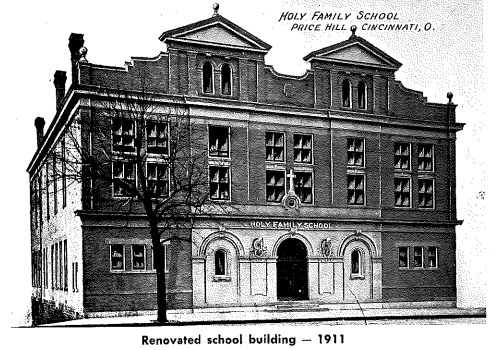
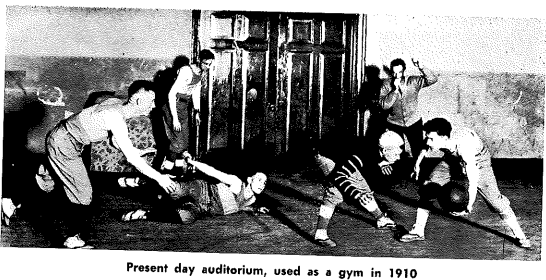
As enrollment continued to skyrocket, the parish undertook a massive project to remodel and expand Library Hall (located at the corner of Price and Grand Avenues) into a dedicated academic facility. On Palm Sunday, April 9, 1911, Archbishop Henry Moeller officially dedicated the newly renovated Holy Family School. By this time, the student body had grown to 325 students, staffed by a faculty of eight Sisters of Charity under the leadership of Sister Adrianna Finneran.
1914 – The First Lay Teacher Joins the Faculty
By 1914, the school's enrollment had climbed to 473 students. To handle the growing numbers, the teaching staff expanded to include nine Sisters of Charity and, for the first time in church records, a secular lay teacher named Agnes Foley. This marked the beginning of a beautifully collaborative era of education at Holy Family, blending the devotion of religious sisters with the talents of local lay educators.
1925 – The Modern School Building and Playground
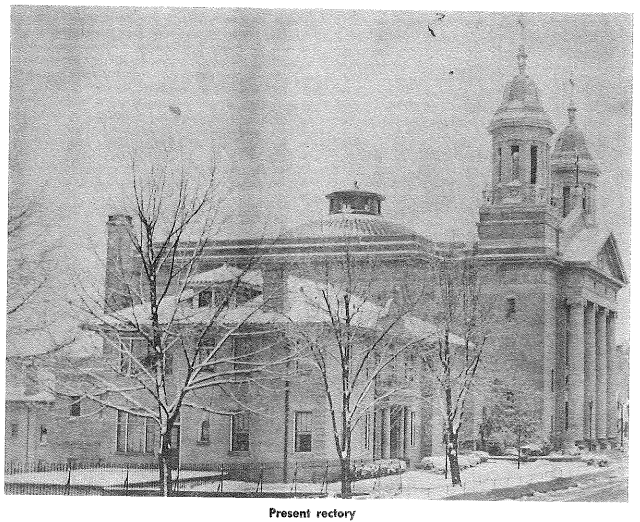
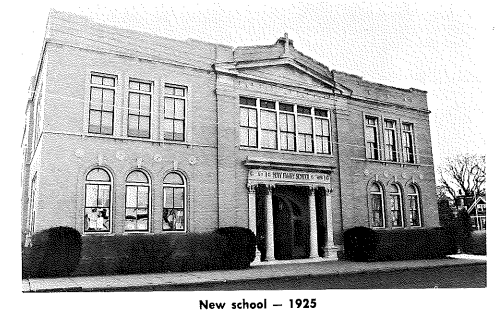
Under the direction of Monsignor George H. Geers, the original 1884 church structure was razed in 1924 to make room for a sweeping campus modernization. In 1925, a brand-new, state-of-the-art school building was completed alongside the current rectory. During this massive construction phase, the parish also transformed a rugged piece of land next to the school—previously used as a neighborhood dump—into a flattened, filled, and paved schoolyard playground for the children.
1940s – Standing Strong Through World War II
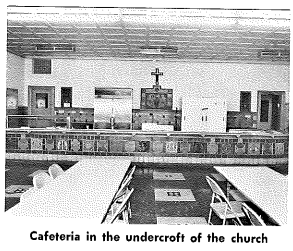
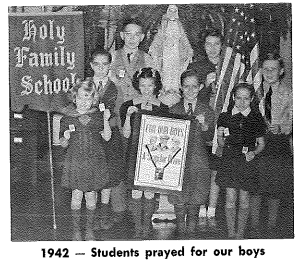
The 1940s brought the challenges of World War II to Price Hill, and Holy Family School students stepped up to support the nation. Children gathered regularly to pray for the 240 men from the parish serving in the armed forces. Following the war, the campus saw fresh interior upgrades, and in 1949, the parish opened a massive, 7,000-square-foot school cafeteria and kitchen in the church undercroft, featuring beautiful, custom-sorted Rookwood tile walls built in part by local high school youth.
1959 – The Peak Enrollment Era
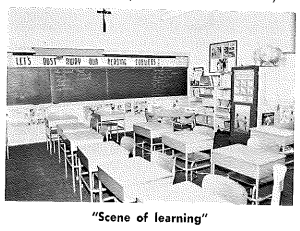
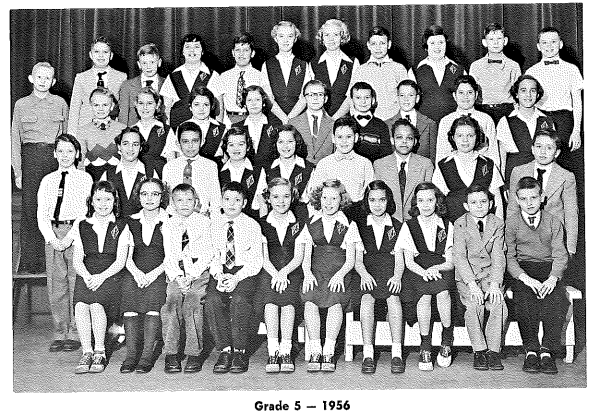
By the start of the 1959–1960 academic year, Holy Family School reached its largest enrollment in history, welcoming over 700 children through its doors. This historic surge was partly due to the nearby St. Michael School closing, with Holy Family proudly absorbing its students. To accommodate the massive student body, the school introduced modern advancements, including a brand-new audio-visual room equipped with the latest filmstrip projectors, a statistiscope, and an innovative remedial reading program.
1960s – Transition and the Second Vatican Council
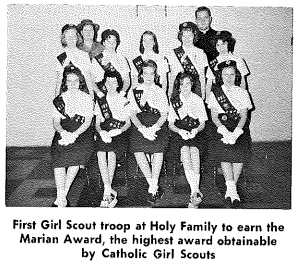
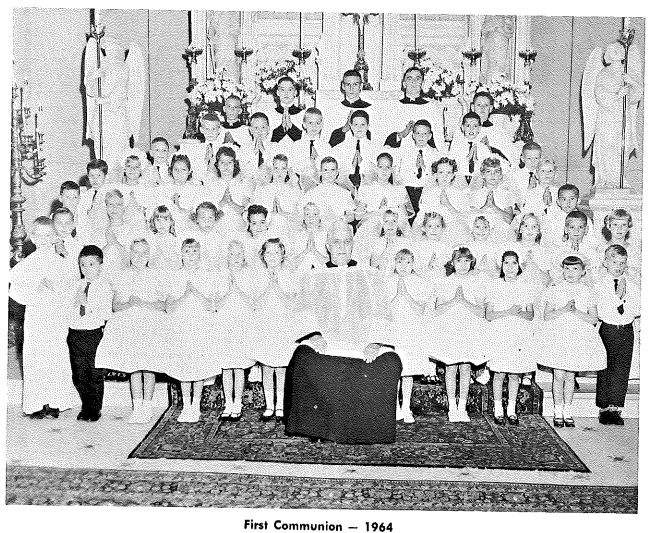
The 1960s brought structural and cultural shifts to the school. In 1964, as families began migrating to the outer western suburbs of Cincinnati, enrollment dropped to 504 students, prompting the school to intelligently lease three empty classrooms to the Cincinnati Board of Education. Following the updates of the Second Vatican Council, the school community shifted focus toward student-led service projects, flourishing Scouting programs, and a newly established, fully cataloged school library in 1966.
The Modern Era – A Lasting Legacy of Faith and Education
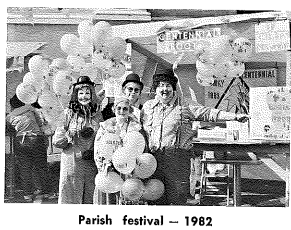
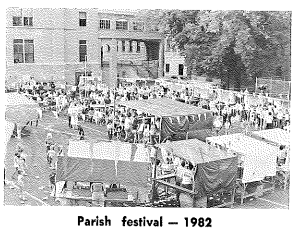
In the decades following its centennial, Holy Family School evolved to meet the changing needs of the Price Hill neighborhood while remaining fiercely true to its 1884 roots.
Transitioning into a diverse, vibrant center of urban Catholic education, the school continues to emphasize deep community service, spiritual formation, and academic excellence. Today, Holy Family stands as a proud, enduring testament to the immigrant families and dedicated Sisters of Charity who paved the way over a century ago.